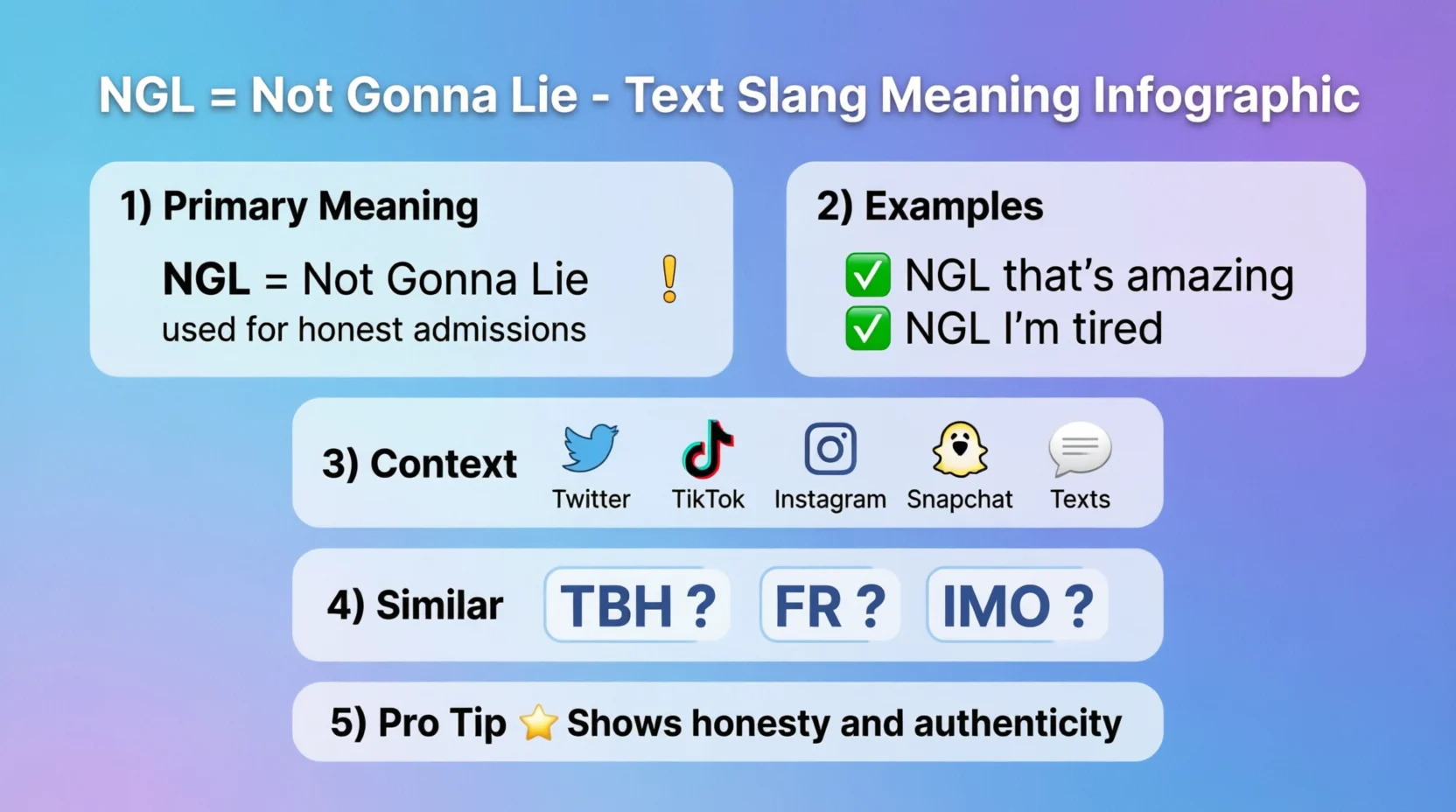
If you spend any time on social media, texting apps, or online chats, you’ve probably come across the term “NGL.” At first glance, it might look confusing—especially if you’re not used to internet slang. But don’t worry. Once you understand it, you’ll start noticing it everywhere.
In this guide, we’ll break down exactly what “NGL” means, how people use it in real conversations, and why it’s become so popular online. Everything is explained in simple language so anyone can understand—even if you’re completely new to texting slang.
What Does NGL Mean?
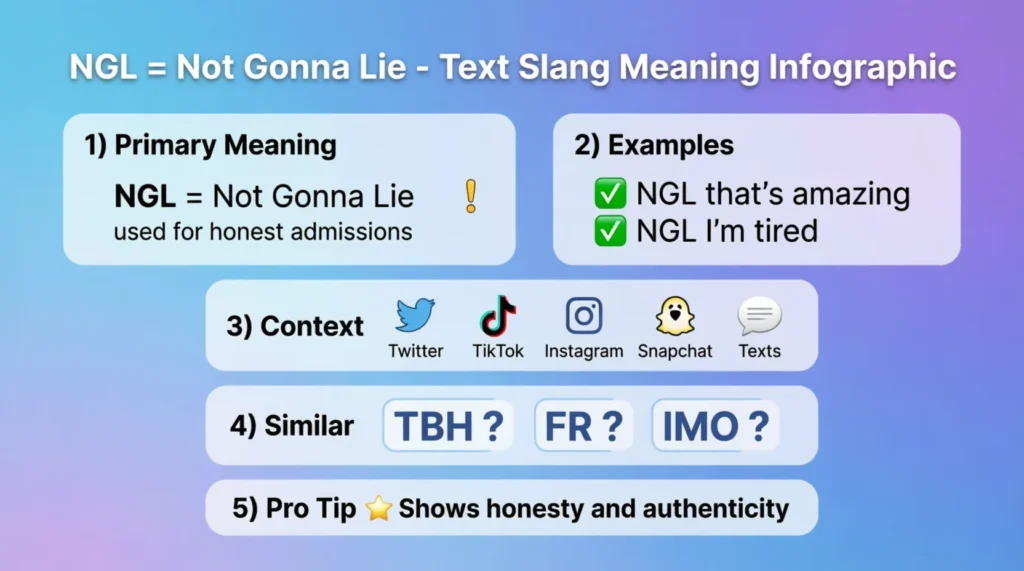
NGL stands for “Not Gonna Lie.”
It’s a casual phrase people use when they want to be honest, direct, or slightly blunt about something.
Think of it like saying:
- “Honestly…”
- “To be real…”
- “I have to admit…”
It’s often used before sharing a personal opinion, especially when the speaker wants to sound sincere or a little vulnerable.
Simple Examples of NGL in Text
Here are some easy examples to help you understand how it’s used:
- “NGL, that movie was kinda boring.”
- “NGL, I really like your outfit today.”
- “NGL, I didn’t expect that to work.”
- “NGL, I miss those days.”
In each case, “NGL” adds a tone of honesty. It signals that the person is being real with you.
Why Do People Use NGL?
People use “NGL” for a few key reasons:
1. To Sound Honest
Adding “NGL” makes a message feel more genuine. It shows the person isn’t pretending or sugarcoating.
Example:
- “NGL, I was nervous before the interview.”
2. To Soften Opinions
Sometimes people use it before saying something slightly negative or unexpected.
Example:
- “NGL, that food wasn’t as good as I thought.”
It makes the statement feel less harsh and more personal.
3. To Add Personality
Online conversations can feel flat. Slang like “NGL” adds emotion and tone.
Example:
- “NGL, that was actually fun 😂”
NGL in Social Media
“NGL” is widely used across platforms like:
- Instagram captions
- TikTok comments
- Snapchat messages
- WhatsApp chats
- Twitter (X) posts
You might see posts like:
- “NGL, this song is stuck in my head 🎶”
- “NGL, I needed this break.”
- “NGL, I thought this would flop but it didn’t.”
It fits perfectly with casual, quick communication.
NGL vs Other Similar Slang
“NGL” isn’t the only phrase people use to express honesty. Here are a few similar ones and how they compare:
NGL vs TBH (To Be Honest)
- Both mean almost the same thing
- “TBH” is slightly older and more common in longer sentences
- “NGL” feels more modern and conversational
Example:
- “TBH, I didn’t like it.”
- “NGL, I didn’t like it.”
NGL vs Honestly
- “Honestly” is more formal
- “NGL” is more casual and internet-friendly
NGL vs FR (For Real)
- “FR” emphasizes seriousness
- “NGL” introduces honesty
Example:
- “That was crazy, FR.”
- “NGL, that was crazy.”
When Should You Use NGL?
You can use “NGL” in many everyday situations, especially informal ones.
Good Situations to Use NGL:
- Talking to friends
- Commenting on social media
- Casual texting
- Sharing opinions
Example:
- “NGL, I’m tired today.”
Situations to Avoid NGL:
- Professional emails
- Job applications
- Formal writing
- Academic work
Instead, use full phrases like “Honestly” or “To be honest” in formal settings.
Real-Life Conversation Examples
Here’s how “NGL” might appear in actual chats:
Friend Chat:
- A: “How was the exam?”
- B: “NGL, it was harder than I expected.”
Social Media Comment:
- “NGL, this is one of the best videos I’ve seen today.”
Text Message:
- “NGL, I didn’t feel like going out tonight.”
These examples show how natural and flexible the phrase is.
The Tone Behind NGL
Understanding tone is important. “NGL” can carry different feelings depending on context:
Honest and Positive
- “NGL, I’m proud of you.”
Honest and Critical
- “NGL, that didn’t make sense.”
Honest and Emotional
- “NGL, I’ve been feeling down lately.”
So while the words stay the same, the emotion changes based on what follows.
Is NGL Rude?
Not usually—but it depends on how you use it.
“NGL” itself isn’t rude. However, if the statement after it is harsh, it might come across that way.
Example:
- “NGL, that was terrible.” → Could sound rude
- “NGL, I think it could be better.” → Softer and more polite
So it’s always a good idea to be mindful of tone.
Why NGL Became So Popular
There are a few reasons why “NGL” has become a common phrase online:
1. Short and Easy
People prefer quick typing. “NGL” saves time.
2. Fits Internet Culture
Online communication is casual and expressive. “NGL” matches that vibe.
3. Relatable
Everyone wants to sound real and honest. This phrase helps do that.
NGL in Memes and Trends
You’ll often see “NGL” used in memes or funny posts:
- “NGL, I came for one thing and stayed for hours.”
- “NGL, this wasn’t part of the plan 😂”
- “NGL, I needed this laugh.”
It works well in humor because it feels natural and unscripted.
Common Mistakes to Avoid
Even though “NGL” is simple, people sometimes misuse it. Here are a few things to watch out for:
1. Using It Too Often
Repeating “NGL” in every sentence can feel forced.
2. Using It in Formal Writing
Avoid it in professional situations.
3. Adding It Without Meaning
Don’t use it unless you’re actually sharing an honest opinion.
Variations and Related Phrases
You might also see variations like:
- “Not gonna lie…” (full version)
- “I’m not gonna lie”
- “Gonna be honest”
These all carry the same basic meaning but are used in slightly different tones.
Is NGL Still Relevant in 2026?
Yes, absolutely.
Even in 2026, “NGL” remains widely used in digital communication. While slang changes quickly, this one has stayed popular because it’s simple, useful, and easy to understand.
New slang terms appear all the time, but “NGL” continues to be part of everyday online language.
Final Thoughts
“NGL” is one of those small phrases that makes a big difference in communication. It adds honesty, personality, and relatability to conversations.
To recap:
- It means “Not Gonna Lie”
- It’s used to express honesty or real opinions
- It’s common in texts and social media
- It should be avoided in formal settings
Once you start using it, you’ll see how naturally it fits into everyday conversations.
So next time you want to share a real opinion, you can say:
“NGL, this phrase is actually pretty useful.”
descover more post
What Does WSGG Mean in Text Real Meaning Examples …
What Does YWA Mean in Text Real Meaning Examples 2026
What Does OC Mean in Text Real Meaning Examples 2026

Ayesha Khan is a dedicated content writer and digital creator at Meizano, passionate about creating clear, helpful, and user-focused content. She specializes in writing easy-to-understand articles that provide real value to readers while following modern SEO and digital content standards. Known for her hardworking mindset, creativity, and attention to detail, Ayesha focuses on delivering high-quality content that helps users find accurate information quickly and easily. She believes in continuous learning, consistency, and building trust through informative and engaging online content.