If you’ve ever seen “PS” at the end of a message, email, or even a social media caption and wondered what it means—you’re not alone. This tiny abbreviation shows up everywhere, but its meaning isn’t always obvious, especially if you’re new to texting or online communication.
Let’s break it down in a simple, clear, and human way so you fully understand what “PS” means, how people use it today, and when you should (or shouldn’t) use it yourself.
What Does PS Mean?
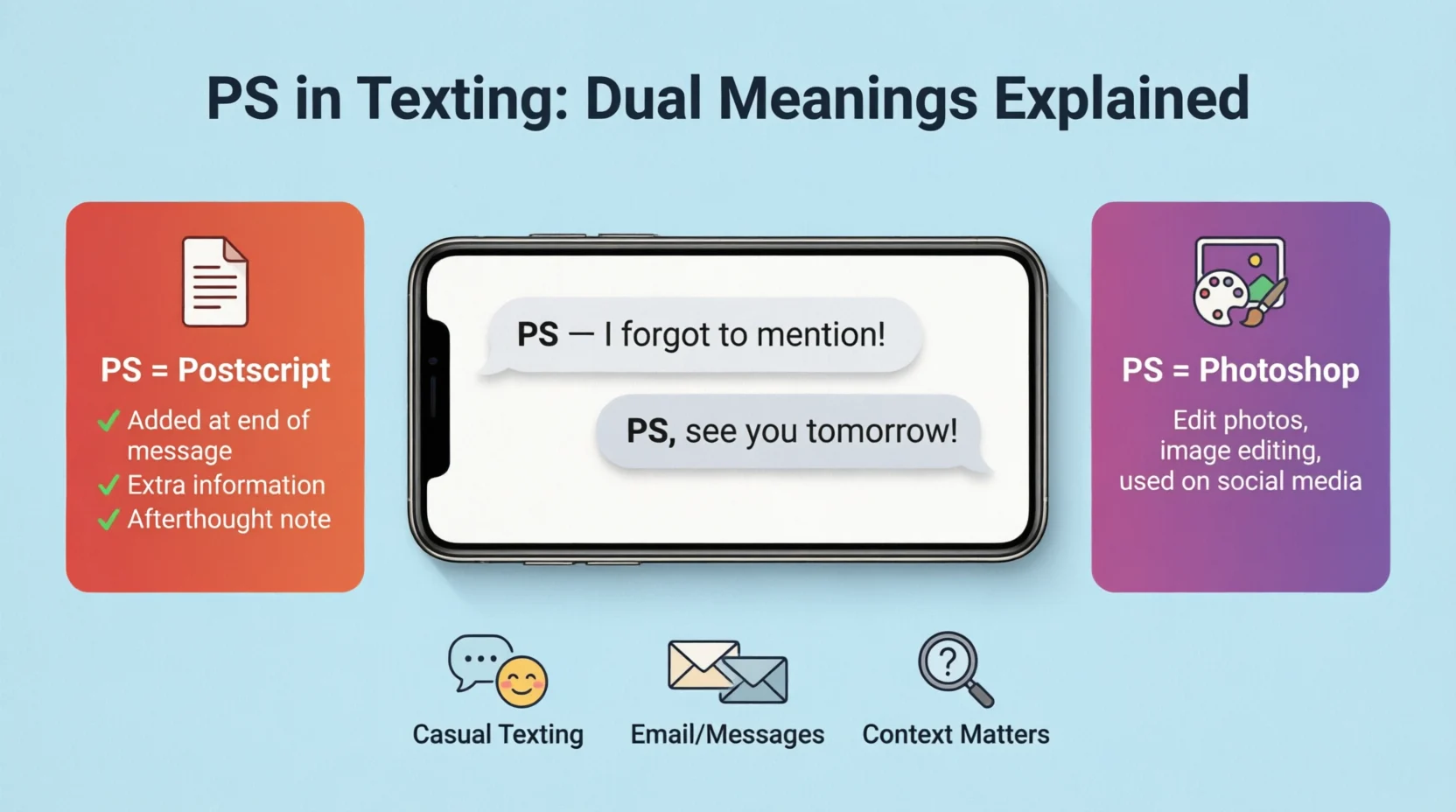
“PS” stands for “postscript.”
The word comes from Latin: post scriptum, which literally means “written after.”
In simple terms:
👉 PS is something you add after you’ve already finished writing your message.
It’s like saying:
“Oh wait, one more thing…”
Why Do People Use PS in Text?
Originally, PS was used in handwritten letters. People would finish writing, then remember something important, and instead of rewriting the whole letter, they would just add a PS at the end.
Today, even though editing is easy, people still use PS—but for slightly different reasons:
- To add an extra thought
- To emphasize something important
- To include a personal or casual note
- To make the message feel more friendly or conversational
Simple Example of PS in Text
Here’s an easy example:
Message:
I’ll send you the notes later today.
PS: Don’t forget about the meeting at 5!
In this case, the PS adds a reminder after the main message.
PS Meaning in Everyday Chat
In texting and messaging, PS is often used casually. It’s not formal anymore—it’s more of a style choice.
Here are some real-life examples:
Example 1: Friendly Reminder
I uploaded the files.
PS: Check the last page, it’s important.
Example 2: Extra Thought
That movie was amazing.
PS: The ending surprised me so much!
Example 3: Personal Touch
Good luck with your exam!
PS: You’ve got this 💪
PS in Social Media
On platforms like Instagram, Facebook, or even WhatsApp, PS is used to:
- Add humor
- Drop a secret or bonus comment
- Highlight something people might miss
Example:
Just posted my new vlog!
PS: Watch till the end 😄
This creates curiosity and encourages engagement.
PS vs PPS (What’s the Difference?)
You might also see “PPS” sometimes.
Here’s what it means:
- PS = First extra note
- PPS = Second extra note (Post-Postscript)
Example:
Thanks for helping me today.
PS: I really appreciate it.
PPS: Let’s grab coffee soon!
It’s like stacking extra thoughts after your message.
Is PS Formal or Informal?
Good question—because this is where many people get confused.
In Emails:
- PS can be semi-formal
- Often used in marketing emails to highlight key info
In Text Messages:
- Completely informal
- Friendly and casual
In Academic Writing:
- ❌ Not recommended
Why PS Still Exists in Digital Communication
You might wonder:
“If we can edit messages easily, why use PS at all?”
Here’s why:
1. It Feels Natural
People think of things after writing. PS mimics real conversation.
2. It Adds Personality
A PS can make a message feel warmer and more human.
3. It Grabs Attention
Readers often notice PS more than the main text.
When Should You Use PS?
Use PS when:
- You remember something after finishing your message
- You want to add a casual or friendly note
- You want to highlight something important
- You’re trying to make your message feel more personal
When NOT to Use PS
Avoid PS when:
- Writing formal reports or assignments
- Sending professional or official documents
- You already included everything clearly in the message
PS in Business and Marketing
Interestingly, PS is very powerful in marketing.
Why?
Because people tend to read it.
Example:
Don’t miss our sale this weekend.
PS: Offer ends tonight at midnight!
That PS creates urgency and grabs attention.
PS in Relationships and Personal Messages
PS can also add emotional value.
Example:
I hope you have a great day.
PS: I miss you ❤️
It feels more genuine and heartfelt than putting everything in one block.
Common Variations of PS
You might see these versions:
- P.S. (with dots – traditional style)
- PS (modern style – more common in texting)
Both mean the same thing.
Is PS Used in Slang?
Not exactly slang—but it’s often used like slang in casual communication.
It’s short, quick, and widely understood, which makes it feel like part of internet language.
Mistakes People Make with PS
Let’s clear up some common errors:
❌ Mistake 1: Overusing PS
Adding too many PS lines can look messy.
❌ Mistake 2: Using PS for main information
Important details should be in the main message—not hidden in PS.
❌ Mistake 3: Using PS in formal writing
It can look unprofessional in serious contexts.
Fun and Creative Ways to Use PS
People often get creative with PS. Here are some fun examples:
Funny
I cleaned my room today.
PS: Don’t check under the bed 😅
Mysterious
Something big is coming soon…
PS: Stay tuned.
Romantic
Good night.
PS: You’re on my mind 💭
PS vs BTW (Are They the Same?)
They’re similar—but not exactly the same.
- PS = Added after finishing the message
- BTW (By the way) = Used inside the message while writing
Example:
I finished the project. BTW, I added extra slides.
VS
I finished the project.
PS: I added extra slides.
Why Beginners Should Learn PS
If you’re new to texting or online communication, understanding PS helps you:
- Read messages correctly
- Avoid confusion
- Communicate more naturally
- Sound more fluent in digital conversation
Final Thoughts
“PS” may be small, but it carries a lot of meaning and personality.
At its core, it simply means:
👉 “Here’s one more thing I want to say.”
Whether you’re texting a friend, posting on social media, or writing an email, PS is a simple way to add that extra touch.
Use it thoughtfully, keep it natural, and you’ll sound more human—not robotic.
descover more post
What Does GNG Mean in Text Real Meaning Examples 2026
What Does BD Mean in Text Real Meaning Examples 2026
What Does BSFS Mean in Text Real Meaning Examples …

Ayesha Khan is a dedicated content writer and digital creator at Meizano, passionate about creating clear, helpful, and user-focused content. She specializes in writing easy-to-understand articles that provide real value to readers while following modern SEO and digital content standards. Known for her hardworking mindset, creativity, and attention to detail, Ayesha focuses on delivering high-quality content that helps users find accurate information quickly and easily. She believes in continuous learning, consistency, and building trust through informative and engaging online content.