If you’ve ever received a message with just “xx” at the end, you might have paused and wondered—what does that actually mean? Is it friendly, romantic, awkward… or just random?
You’re not alone. Short text expressions like this are everywhere in modern messaging. From WhatsApp chats to Instagram DMs, people use tiny symbols and abbreviations to express emotions quickly. But their meaning can change depending on who sends them and where.
In this guide, you’ll learn exactly what “xx” means in text, how people use it, when it’s appropriate, and how to reply without overthinking it.
What Does “XX” Mean in Text?
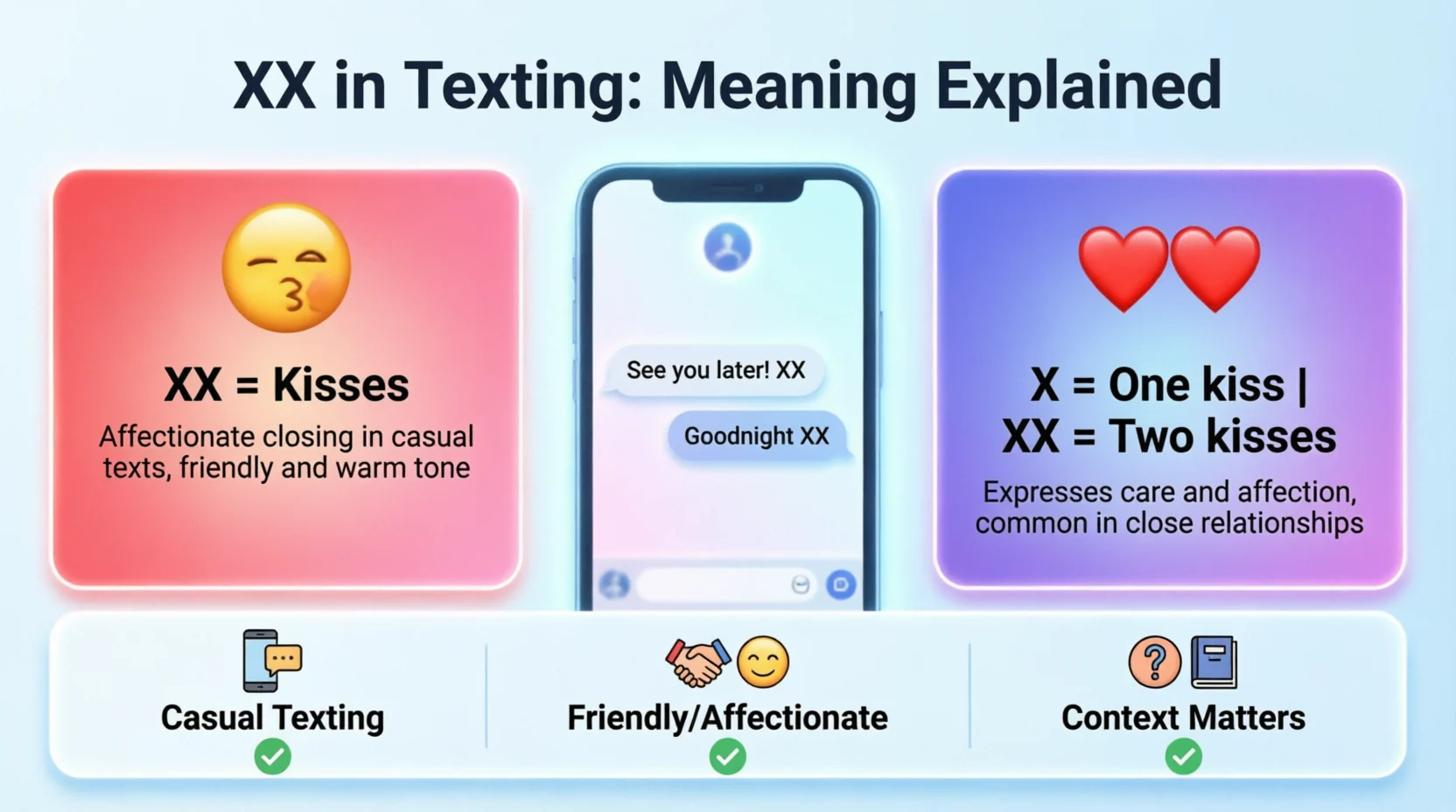
At its core, “xx” in text usually means kisses.
It’s a simple way to show affection, warmth, or friendliness at the end of a message. Think of it like a softer, digital version of a goodbye hug or cheek kiss.
For example:
- “Goodnight, sleep well xx”
- “See you tomorrow xx”
In both cases, the “xx” adds a kind, caring tone to the message.
Why Do People Use “XX”?
People use “xx” for emotional tone. Text messages don’t carry facial expressions or voice, so small additions like this help show intention.
Here’s what “xx” can communicate:
- Warmth
- Friendliness
- Affection
- Politeness
- Softening a message
Without it, a message can sometimes feel blunt or cold. Adding “xx” makes it feel more human.
Is “XX” Romantic or Just Friendly?
This is where things get interesting.
“xx” can be romantic—but not always.
It depends on:
1. Your Relationship
- Between close friends → Friendly
- Between partners → Romantic
- Between acquaintances → Polite or slightly warm
2. Context
“Thanks xx” feels casual and friendly.
“Miss you xx” leans more emotional or romantic.
3. Frequency
If someone always uses “xx,” it’s probably just their texting style.
If they suddenly start using it, it might mean something more.
Difference Between “X” and “XX”
Yes, the number of X’s actually matters.
- x → One kiss (light, polite)
- xx → More warmth, slightly affectionate
- xxx → Stronger affection or closeness
Some people even go beyond that, but in most cases:
“xx” is the safe middle ground.
Where Did “XX” Come From?
The use of “x” to represent a kiss dates back centuries.
In old letters, people who couldn’t write would sign with an “X” and then kiss it as a symbol of sincerity. Over time, this turned into a symbol for a kiss itself.
Fast forward to texting culture, and it became a quick way to express affection without typing full sentences.
How “XX” Is Used on Social Media
You’ll often see “xx” on:
- Instagram captions
- Snapchat messages
- WhatsApp chats
- Facebook comments
Examples:
- “Had the best day with you xx”
- “Thanks for all the support xx”
- “Love this outfit xx”
On social media, it usually adds a friendly or appreciative tone rather than deep romance.
Examples of “XX” in Real Conversations
Here are some everyday examples to help you understand how it works:
Friendly Use
- “Thanks for helping me today xx”
- “Talk later xx”
Casual Politeness
- “Got your message, I’ll reply soon xx”
Romantic or Flirty
- “Can’t wait to see you xx”
- “Miss you already xx”
Family Use
- “Goodnight mom xx”
- “Love you xx”
As you can see, the meaning shifts slightly depending on the situation.
When Should You Use “XX”?
If you’re new to using “xx,” here’s a simple guide:
Use It When:
- You want to sound friendly
- You’re texting someone you know well
- The other person already uses it
- You want to soften your tone
Avoid It When:
- Messaging in formal situations (work emails, clients)
- Talking to someone you don’t know well
- You’re unsure about the tone
Is It Weird If You Don’t Use “XX”?
Not at all.
Some people use it all the time. Others never use it.
Texting styles vary by:
- Age
- Culture
- Personality
- Region
For example, in some places (like the UK), using “xx” is very common—even in casual conversations. In other regions, it might feel too personal.
How to Reply When Someone Sends “XX”
If someone sends you a message ending in “xx,” you don’t have to overthink your reply.
Here are a few easy options:
Match Their Style
If they used “xx,” you can reply with it too:
- “See you soon xx”
Keep It Neutral
If you’re unsure:
- “See you soon!”
Add It Gradually
If you want to mirror their tone without being too forward, you can start using it slowly over time.
Common Misunderstandings About “XX”
1. It Always Means Romance
Not true. Most of the time, it’s just friendly.
2. More X’s = Strong Feelings
Sometimes, but often it’s just habit.
3. It’s Flirty by Default
It can be—but context matters more than the symbol itself.
“XX” vs Other Text Symbols
Let’s compare “xx” with similar expressions:
- ❤️ (heart emoji) → Stronger emotional meaning
- 😊 (smiley) → Friendly but less affectionate
- xo / xoxo → Hugs and kisses (more expressive)
- 🙂 → Basic friendliness
“xx” sits somewhere in the middle—warm but not overly emotional.
Cultural Differences in Using “XX”
This is something many people don’t realize.
In some countries, “xx” is used very casually—even between coworkers or acquaintances.
In others, it may feel too personal or even confusing.
So if someone from another culture uses it, don’t read too much into it right away.
Why “XX” Still Matters in 2026
Even with emojis, GIFs, and voice notes, simple text symbols like “xx” are still widely used.
Why?
Because they are:
- Quick
- Easy
- Subtle
- Familiar
They add emotion without making a message look cluttered.
Final Thoughts
So, what does “xx” mean in text?
In most cases, it simply means kisses—a small, friendly way to show warmth and connection.
It’s not always romantic, and it doesn’t always carry deep meaning. Often, it’s just part of someone’s texting style.
The key is to look at:
- Who sent it
- What they said
- How they usually text
Once you understand the context, “xx” becomes easy to read—and even easier to use naturally.
descover more post
What Does BDE Mean in Text Real Meaning Examples 2026
What Does LOML Mean in Text Real Meaning Examples …
What Does Opt Mean in Text Real Meaning Examples 2026

Alina Sheikh is a passionate content writer and digital creator who focuses on delivering helpful, easy-to-understand, and user-friendly content. She is dedicated to creating high-quality articles that solve real problems and provide clear value to readers. With a strong work ethic and a continuous learning mindset, Alina believes in consistency, growth, and producing content that truly helps people online.