If you’ve ever been texting someone or scrolling through social media and suddenly seen the word “MIA,” you might have paused for a second. What does it actually mean? Is it a name? A code? Something serious?
You’re not alone. Internet slang evolves quickly, and terms like “MIA” can feel confusing if you’re not familiar with them. The good news is that “MIA” is actually quite simple once you understand the context.
In this article, we’ll break down the meaning of “MIA” in chat, where it comes from, how people use it in real conversations, and why it’s so common online today.
What Does “MIA” Mean in Chat?
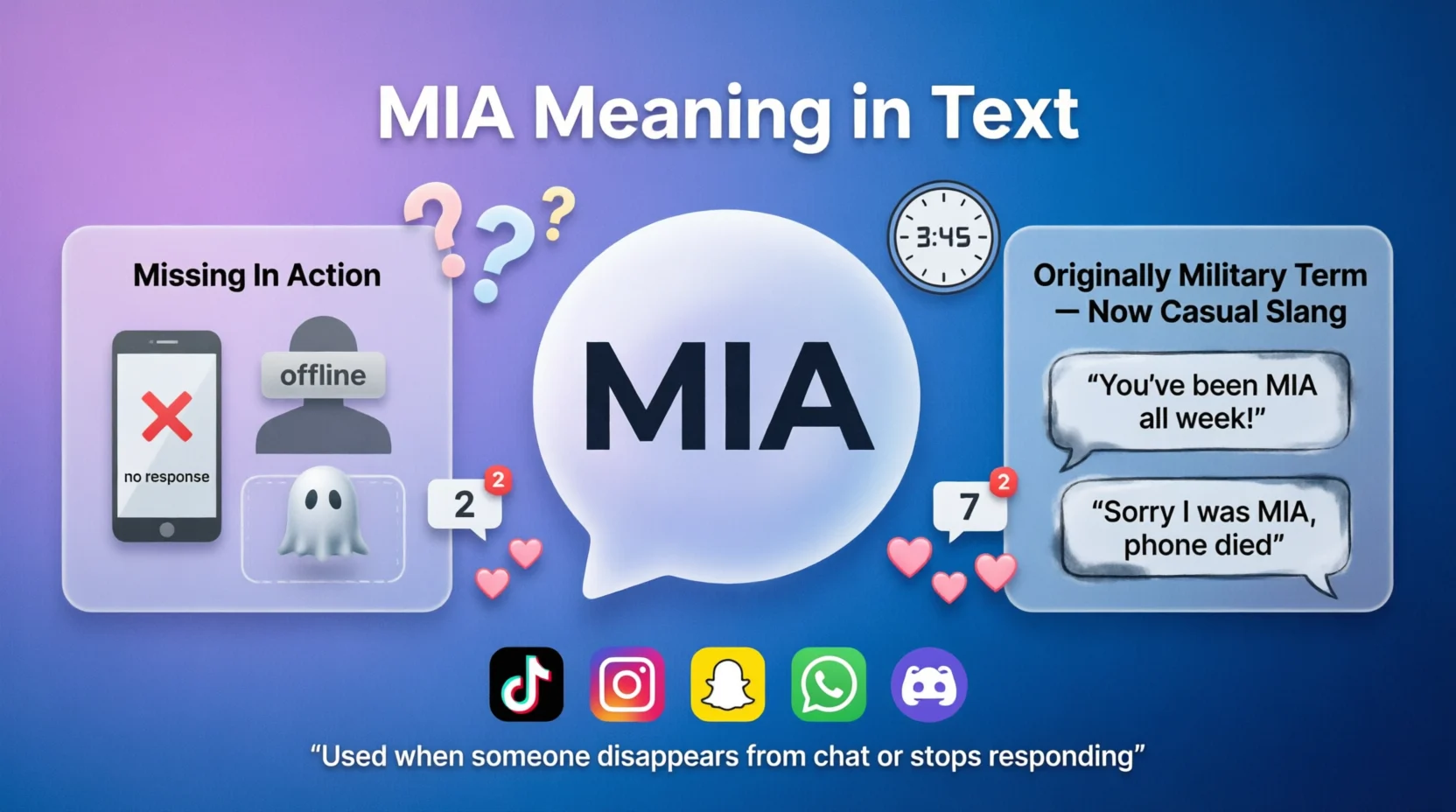
In texting and online conversations, “MIA” means “Missing In Action.”
It’s used to describe someone who has disappeared, gone quiet, or hasn’t been responding for a while.
For example:
- “You’ve been MIA all day. Where were you?”
- “Sorry, I was MIA yesterday. I had a lot going on.”
It doesn’t usually mean anything serious. Most of the time, it’s just a casual way of saying someone hasn’t been around or active.
Where Did “MIA” Come From?
The term “MIA” originally comes from the military. It stands for “Missing In Action” and was used to describe soldiers who could not be found during or after a mission.
Over time, this phrase moved into everyday language. People started using it in a lighter, less serious way to talk about someone being absent or unreachable.
Now, it’s widely used in texting, social media, and even workplace chats.
How “MIA” Is Used in Everyday Chat
“MIA” is very flexible. You can use it in many situations, depending on tone and context.
1. When Someone Doesn’t Reply
This is the most common use.
- “Why are you MIA? I’ve been texting you!”
- “He’s been MIA since last night.”
Here, it simply means the person hasn’t responded.
2. When Someone Disappears Socially
Sometimes people go quiet on social media or stop showing up.
- “She’s been MIA on Instagram lately.”
- “I went MIA for a week to focus on exams.”
This doesn’t mean anything negative. It often just means taking a break.
3. Joking or Teasing
Friends often use “MIA” in a playful way.
- “Oh wow, you finally replied. Thought you went MIA forever!”
- “Don’t go MIA on me again!”
It adds a light, humorous tone to the conversation.
4. Work or Group Chats
Even in professional settings, “MIA” can appear—though usually in a casual tone.
- “Hey, John’s been MIA from meetings this week.”
- “Sorry team, I was MIA due to a deadline.”
In these cases, it still means unavailable or absent.
Is “MIA” Rude or Offensive?
Not usually. “MIA” is generally neutral and harmless.
However, tone matters.
If used aggressively, it might sound like you’re accusing someone of ignoring you:
- “Why are you always MIA?” (can sound annoyed)
But in most cases, it’s friendly or casual:
- “You were MIA yesterday!” (light tone)
To avoid misunderstandings, match your tone with your relationship.
Examples of “MIA” in Real Conversations
Let’s look at some natural examples so you can see how people actually use it.
Example 1: Friends Chatting
- A: “Bro where were you?”
- B: “Sorry, I was MIA. Fell asleep early.”
Example 2: Social Media Comment
- “You’ve been MIA lately! Miss your posts.”
Example 3: Work Message
- “Apologies, I was MIA this morning. Catching up now.”
Example 4: Casual Text
- “I went MIA for a bit to clear my head.”
Other Meanings of “MIA” (Less Common)
While “Missing In Action” is the most popular meaning, “MIA” can sometimes mean other things depending on context.
1. A Name
“Mia” can also be a common first name.
Example:
- “Mia is coming to the party.”
In this case, it’s not slang at all.
2. Location (Rare in Chat Context)
“MIA” is also an airport code for Miami.
But this is rarely used in casual chat unless you’re talking about travel.
Why People Use “MIA” Instead of Saying “Busy”
You might wonder—why not just say “I was busy”?
The answer is tone and simplicity.
“MIA”:
- Sounds more casual
- Feels lighter and less formal
- Adds personality to the message
Compare these:
- “Sorry, I was busy.”
- “Sorry, I was MIA.”
The second one feels more relaxed and conversational.
Similar Slang Terms to “MIA”
If you understand “MIA,” you might also see these related expressions:
1. Ghosted
Means someone suddenly stopped replying completely.
- “He ghosted me.”
This is stronger than “MIA” and often negative.
2. AFK (Away From Keyboard)
Used mostly in gaming or online chats.
- “BRB, going AFK.”
3. Offline
Simple and direct.
- “I was offline all day.”
4. Disappeared
A more straightforward version.
- “You disappeared yesterday!”
When Should You Use “MIA”?
You can safely use “MIA” in:
- Text messages with friends
- Social media comments
- Casual conversations
- Informal work chats
But avoid it in very formal situations like:
- Job applications
- Official emails
- Academic writing
In those cases, use phrases like:
- “Unavailable”
- “Out of reach”
- “Absent”
How to Reply When Someone Calls You “MIA”
If someone says you’ve been MIA, don’t worry—it’s not a big deal.
Here are some easy replies:
- “Haha yeah, I was MIA. Just needed a break.”
- “Sorry, I’ve been busy lately.”
- “I know! I’ll try to be more active.”
Keep it simple and friendly.
Why “MIA” Is So Popular on Social Media
Short slang terms like “MIA” work perfectly online because:
- They’re quick to type
- Easy to understand
- Widely recognized
- Fit casual communication
In a world where people prefer fast and informal messaging, abbreviations like this save time and keep conversations flowing.
Common Mistakes to Avoid
Even though “MIA” is simple, some people misuse it.
1. Using It in the Wrong Tone
Avoid sounding too harsh:
- “You’re always MIA” → can feel like criticism
2. Confusing It With a Name
Make sure context is clear:
- “Mia didn’t reply” (name)
- “You were MIA” (slang)
3. Overusing It
Using it too often can sound repetitive. Mix it with other expressions.
Final Thoughts
“MIA” is one of those internet slang terms that seems confusing at first but becomes incredibly easy once you know it.
In chat, it simply means someone has been absent, quiet, or not responding for a while.
It’s casual, friendly, and widely used across texting, social media, and even informal work conversations.
Understanding terms like this helps you stay connected and communicate more naturally in today’s digital world.
So the next time someone says you’ve been MIA, you’ll know exactly what they mean—and how to respond.
descover more post
What Does Su Mean in Text Real Meaning Examples 2026
What Does IIRC Mean in Text Real Meaning Examples 2026
What Does ATP Mean in Text Real Meaning Examples 2026

Ayesha Khan is a dedicated content writer and digital creator at Meizano, passionate about creating clear, helpful, and user-focused content. She specializes in writing easy-to-understand articles that provide real value to readers while following modern SEO and digital content standards. Known for her hardworking mindset, creativity, and attention to detail, Ayesha focuses on delivering high-quality content that helps users find accurate information quickly and easily. She believes in continuous learning, consistency, and building trust through informative and engaging online content.