
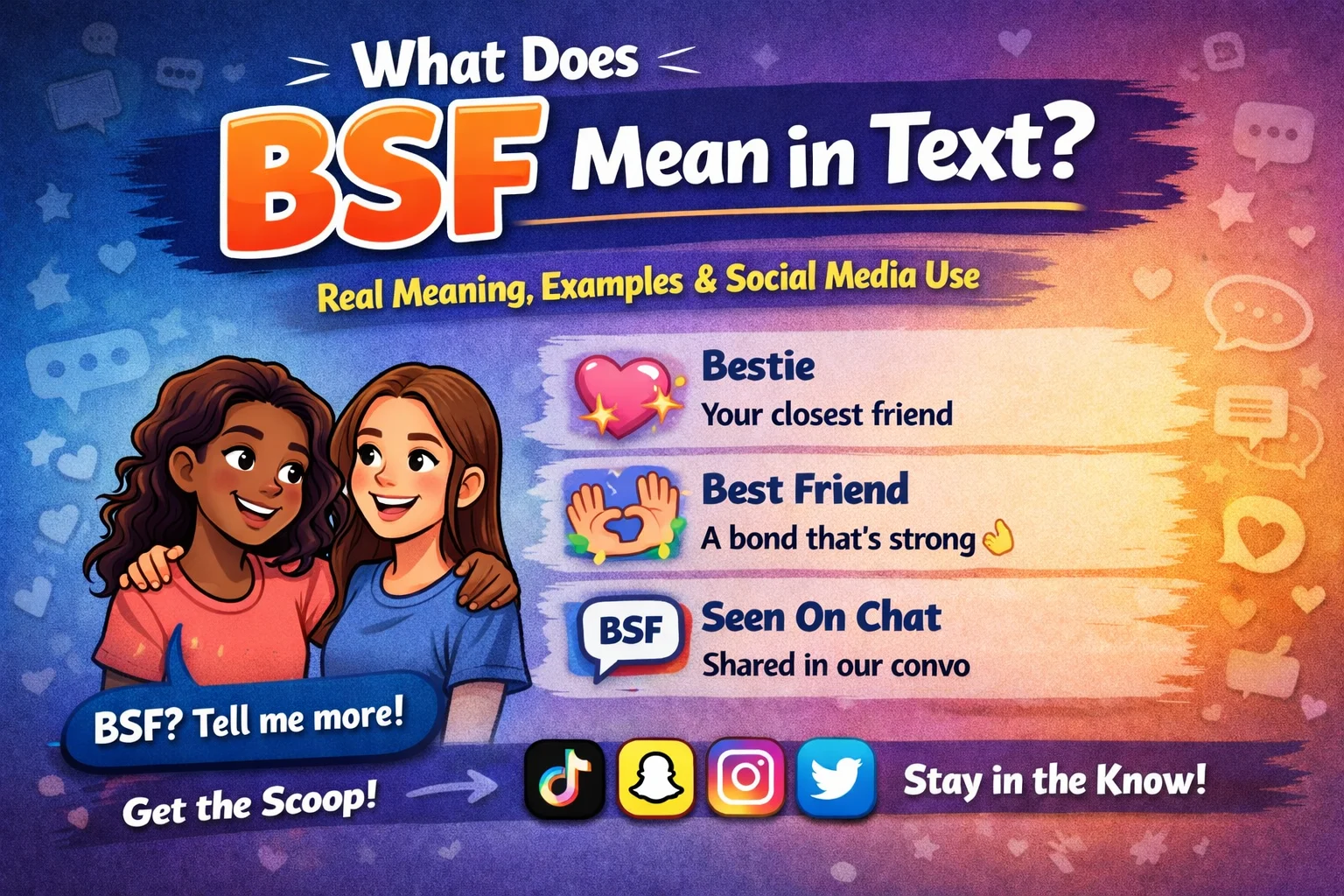
If you spend time on social media, texting apps, or online chats, you’ve probably come across the term “BSF.” At first glance, it might seem confusing—especially if you’re not familiar with internet slang. But don’t worry. You’re not alone.
In this guide, we’ll break down the real meaning of “BSF,” how people use it in conversations, and what it looks like in real-life examples. By the end, you’ll understand exactly what it means and when to use it yourself.
Let’s dive in.
What Does BSF Mean?
“BSF” stands for Best Friend.
It’s a casual and friendly abbreviation people use in texting and social media to refer to someone they are very close to. Think of it as a shorter, quicker way of saying “best friend forever” or “my closest friend.”
People use “BSF” to describe someone they trust, share secrets with, and spend a lot of time talking to.
Why Do People Use BSF Instead of “Best Friend”?
The main reason is simple: convenience.
In fast-paced online conversations, people prefer short words and abbreviations. Typing “BSF” saves time and feels more natural in chats.
Here are a few reasons why it’s popular:
- It’s quick to type
- It fits casual conversations
- It feels modern and trendy
- It’s widely understood among younger users
Just like “LOL” or “OMG,” “BSF” is part of everyday digital language now.
Where Is BSF Commonly Used?
You’ll see “BSF” in many places online. It’s not limited to just one platform.
1. Text Messages
People often use it in personal chats:
- “My BSF is coming over today.”
- “I told my BSF everything.”
2. Social Media
It’s very popular on platforms like Instagram, TikTok, and Snapchat:
- “Miss you BSF ❤️”
- “Out with my BSF tonight!”
3. Captions and Stories
Users include it in captions when posting photos with friends:
- “Late night talks with my BSF”
- “My BSF always makes me laugh”
Real-Life Examples of BSF in Conversations
To make things clearer, here are some natural examples of how people actually use “BSF” in everyday chats.
Example 1:
- Person A: “Who are you going with?”
- Person B: “Just my BSF.”
Example 2:
- “My BSF knows all my secrets.”
Example 3:
- “Can’t wait to see my BSF this weekend!”
Example 4:
- “You’re not just my friend, you’re my BSF.”
As you can see, it’s always used in a friendly, emotional context.
Is BSF Always Positive?
Most of the time, yes.
“BSF” is usually used in a positive and affectionate way. It shows closeness, trust, and friendship.
However, like many slang terms, tone matters. In rare cases, people might use it sarcastically, especially in jokes:
- “Yeah sure, my ‘BSF’ totally forgot my birthday 🙄”
But generally, it’s meant to be warm and friendly.
Different Meanings of BSF (Other Uses)
Although “Best Friend” is the most common meaning, “BSF” can have other meanings depending on context.
Here are a few less common ones:
1. Best Sister Friend
Some people use “BSF” to describe a friend who feels like family, especially like a sister.
2. Business Support Function
In professional settings, “BSF” might stand for something completely different, like “Business Support Function.” But this is rarely used in casual chats.
3. Border Security Force
In certain contexts, especially related to news or government, “BSF” can refer to a security organization. But again, this meaning is not related to texting slang.
Important tip:
Always look at the context. In most casual conversations, “BSF” means “Best Friend.”
BSF vs BFF – What’s the Difference?
You might be wondering: how is “BSF” different from “BFF”?
Let’s break it down.
BFF (Best Friends Forever)
- Emphasizes long-term friendship
- Slightly older slang
- Still widely used
BSF (Best Friend)
- More modern and trendy
- Common on newer platforms
- Feels more casual
In simple terms, both mean almost the same thing. The difference is mostly about style and preference.
When Should You Use BSF?
You can use “BSF” anytime you’re talking about a close friend in a casual setting.
Here are some situations where it fits perfectly:
- Chatting with friends
- Posting on social media
- Writing captions
- Sending messages
Example Uses:
- “Going shopping with my BSF.”
- “My BSF always understands me.”
- “Love you BSF!”
When NOT to Use BSF
Even though it’s popular, there are times when using “BSF” might not be appropriate.
1. Formal Situations
Avoid using it in:
- Job emails
- Professional messages
- School assignments
Instead, use “best friend” in full or avoid slang altogether.
2. Talking to Older Audiences
Not everyone understands internet slang. If you’re talking to someone unfamiliar with it, it might confuse them.
How BSF Became Popular
Internet slang spreads fast, especially through social media.
“BSF” became popular because:
- Influencers and content creators use it
- It appears in viral posts and captions
- Younger users adopt and share it quickly
Over time, it became a normal part of online language.
Emotional Meaning Behind BSF
“BSF” is more than just a short word. It carries emotional meaning.
When someone calls you their “BSF,” it usually means:
- They trust you deeply
- They feel comfortable with you
- They value your friendship
It’s a strong label, even though it looks simple.
Common Variations and Similar Slang
Here are some similar terms you might see:
- Bestie – A cute way to say best friend
- BFF – Best friends forever
- Bro – Close male friend
- Sis – Close female friend
Each one has a slightly different tone, but they all relate to friendship.
Is BSF Still Popular in 2026?
Yes, absolutely.
“BSF” is still widely used in 2026, especially among younger audiences. It continues to appear in:
- TikTok comments
- Instagram captions
- Snapchat messages
While slang changes over time, “BSF” has stayed relevant because it’s simple and meaningful.
Tips for Understanding Internet Slang Like BSF
If you often feel confused by online slang, here are a few helpful tips:
1. Look at the Context
The meaning usually becomes clear based on how it’s used.
2. Don’t Be Afraid to Ask
It’s okay to ask someone what a word means.
3. Keep Learning
New slang appears all the time, so staying curious helps.
Final Thoughts
“BSF” is a simple but meaningful slang term that stands for “Best Friend.” It’s widely used in texting and social media to show closeness and affection.
Even though it’s just three letters, it represents strong friendships and emotional connections.
If you see it in a message or post, now you know exactly what it means—and you can start using it too.
So next time you’re chatting with a close friend, try saying:
“Thanks for always being my BSF.”
It’s short, sweet, and says a lot.

Ayesha Khan is a dedicated content writer and digital creator at Meizano, passionate about creating clear, helpful, and user-focused content. She specializes in writing easy-to-understand articles that provide real value to readers while following modern SEO and digital content standards. Known for her hardworking mindset, creativity, and attention to detail, Ayesha focuses on delivering high-quality content that helps users find accurate information quickly and easily. She believes in continuous learning, consistency, and building trust through informative and engaging online content.